






Solution
for Unified Product Data Across Channels
Magenest enables businesses to centralize, govern, and distribute trusted product data across websites, marketplaces, POS, and other sales channels
Centralize product data
Standardize SKUs & attributes
Synchronize data across channels
Streamline product updates
Trusted by leading businesses


As Catalogs Grow,
Product Data Gets Harder to Control
Scattered data across files, systems, and teams makes it harder to maintain accuracy, consistency, and speed to market

Product data scattered across files, teams, and systems

Prices, descriptions, attributes, and images vary across channels

Required product data is missing for some channels

Data must be reformatted for each platform

The latest product information is hard to identify

Product launches and channel expansion take longer

PIM as the Central Source of Product Data Across Your Catalog
Centralize, standardize, and govern product data in one trusted source before distributing it across sales channels

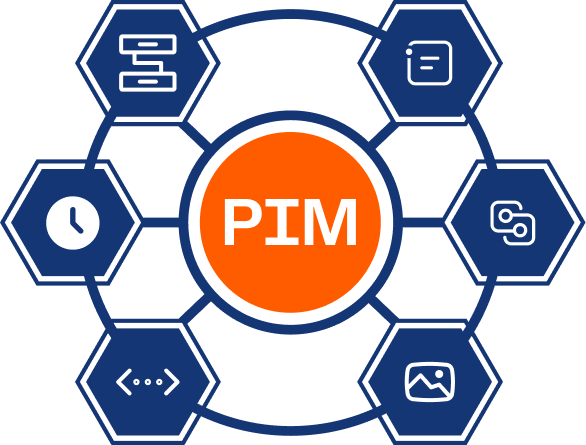
Centralize Product Data
Bring product data into one source

Standardize Product Data
Align attributes and structures

Enrich Product Content
Complete product information

Control Data Quality
Ensure accuracy and completeness

Manage Versions
Keep product data up to date

Prepare for Distribution
Prepare data for each channel
How PIM Collects, Enriches, and Distributes Product Data
PIM brings product data into one controlled flow, from source systems to every sales channel
Collect
Consolidate data from ERP, suppliers, files, and other sources
Centralize SKUs, identifiers, and core product attributes
Enrich
Enhance descriptions, media, and product specifications
Improve completeness and data quality
Distribute
Prepare product data for each sales channel
Sync to websites, marketplaces, POS, and other systems
Core Features for Product Data Management
PIM adds the control needed to keep product data accurate, complete, and ready for omnichannel distribution
Centralized Product Data
- One source for all product information
- Eliminate scattered files and conflicting versions
Digital Asset Management (DAM)
- Manage images, videos, and product documents
- Link assets directly to SKUs or categories
Localization & Market Data
- Manage multilingual and market-specific content
- Adapt product data for each region and sales channel
Data Quality Control
- Check completeness and accuracy before distribution
- Set rules to block incomplete product data
Connect Product Data Across the Entire Ecosystem
Manage product data once, govern it centrally, and keep it consistent across commerce, operations, and analytics systems
Centralized management, consistent data distribution
eCommerce — Websites and digital storefronts
Marketplaces — Marketplaces and digital commerce channels
ERP / Back Office — Exchange product codes, prices, stock, and source data
OMS — Align product data with order management workflows
POS / Apps / Sales Materials — Keep product information consistent across customer-facing channels
DAM / CMS / BI — Connect product content, digital assets, and related data
Centralized management, consistent data distribution
01 — eCommerce: Websites and digital storefronts
02 — Marketplaces: Marketplaces and digital commerce channels
03 — ERP / Back Office: Exchange product codes, prices, stock, and source data
04 — OMS: Align product data with order management workflows
05 — POS / Apps / Sales Materials: Keep product information consistent across customer-facing channels
06 — DAM / CMS / BI: Connect product content, digital assets, and related data
The Strategic Value of PIM
With product data managed from a single source, businesses can reduce inconsistencies, accelerate product launches, and strengthen omnichannel operations
Minimize cross-channel data discrepancies
Accelerate time to market
Reduce manual effort in daily operations
Maintain consistent product information
Expand into new channels with control
Unlock more value from product data
Reduce data discrepancies across channels
Accelerate time to market
Reduce manual effort in daily operations
Maintain consistent product information
Expand into new channels with control
Unlock more value from product data

PIM implementation process
Magenest delivers PIM through a structured roadmap, from data assessment and model design to system integration, testing, training, and post-go-live optimization

Current-state Assessment

Define the PIM scope

Data model design

System integration

Data & Workflow testing

Training & Optimization

Current-state Assessment

Define the PIM scope

Data model design

System integration

Data & Workflow testing

Training & Optimization
How Magenest Implements PIM Differently
Magenest combines commerce, data governance, system integration, and long-term operations to deliver PIM around real business needs
Commerce & Data Expertise
eCommerce, ERP, OMS, and product data in one view
Data Governance by Design
Standardize rules and workflows, not just software
Complex Catalog Experience
Support large SKU sets, attributes, languages, and channels
Architecture for Growth
Design PIM around current needs and future expansion
Flexible System Integration
Connect PIM with eCommerce, ERP, OMS, DAM, BI, and more
Post-Go-Live Support
Continue optimizing performance after implementation
Frequently Asked Questions
What is PIM, and what is it used for?
PIM centralizes, enriches, and distributes product data from a single source across sales channels.
When should a business consider implementing PIM?
PIM is worth considering when businesses manage many SKUs, product variants, sales channels, or product data spread across spreadsheets, ERP, websites, marketplaces, and internal teams
How is PIM different from ERP, OMS, or CMS?
ERP and OMS support operations, while CMS manages website content. PIM focuses specifically on product information and its consistency across channels.
What systems can PIM integrate with?
PIM can connect with eCommerce platforms, marketplaces, ERP, OMS, POS, DAM, CMS, BI, and other business systems.
Does product data need to be standardized before PIM implementation?
Yes. Data standardization is typically part of the implementation process, from data assessment to attribute and governance design.
Is Your Product Data Ready for Omnichannel Growth?
Connect with Magenest's experts to optimize product data and build a seamless PIM integration roadmap